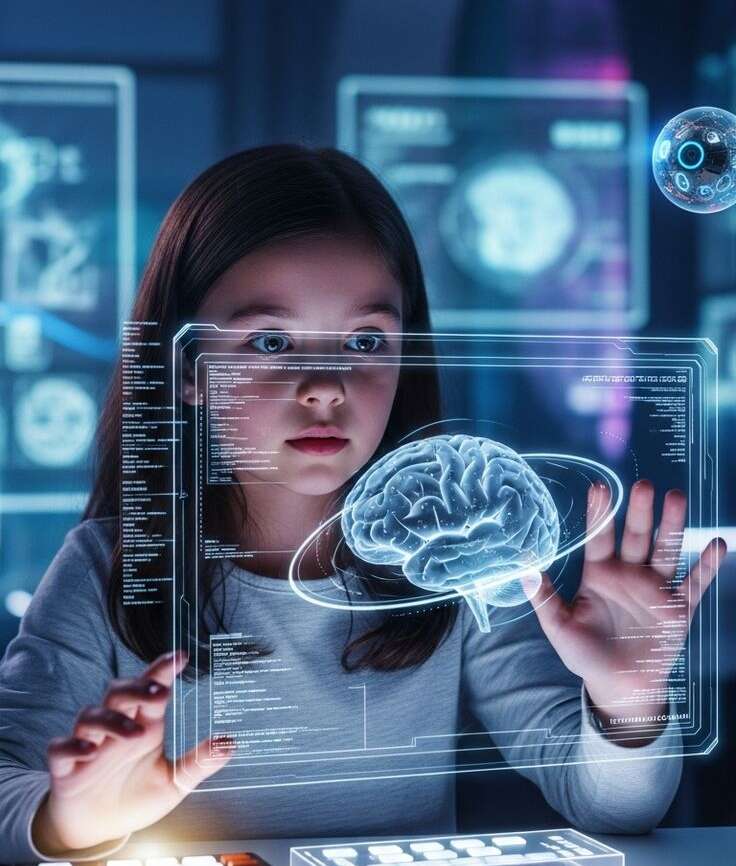
Personalized learning with artificial intelligence (AI) stands out as one of the fastest developing areas of educational technologies. While traditional education systems offer the same content and at the same pace to all students, AI-supported systems analyze each individual’s learning process and create a customized learning experience. This approach both increases learning efficiency and aims to reveal students’ potential more effectively.
AI personalized learning systems analyze data such as the student’s learning speed, interests, strengths and weaknesses. Thanks to this analysis, student-specific content, tests and learning paths are created. For example, if a student struggles with math, the system can focus more on this area while accelerating progress in subjects where they are strong. This offers a much more dynamic and effective learning process compared to the classical education model.
The use of AI in education is not limited to individual learning. It also provides powerful data analytics for teachers and educational institutions. These systems, which analyze the overall performance of students, identify students at risk at an early stage, allowing for timely interventions. In this way, the education process can be managed more proactively and strategically.
Another important advantage of personalized learning is that it increases motivation. The learning process becomes more fluid and sustainable when students progress with content that is appropriate for their level. This significantly improves the user experience, especially in online education and digital learning platforms. This is why many platforms operating in the field of educational technologies invest in artificial intelligence-based solutions.
However, personalized learning systems with AI also have some important risks. Issues such as data security, ethical use and algorithmic bias are the main topics to be considered in this field. Proper protection of student data and fair operation of AI systems are critical for a sustainable education model.
In conclusion, personalized learning with AI is one of the most important transformations shaping the future of education. Thanks to this technology, education is becoming more flexible, more efficient and more student-oriented. While most of the education systems are expected to become AI-supported in the future, individuals and institutions that adapt to this transformation will gain a significant advantage.