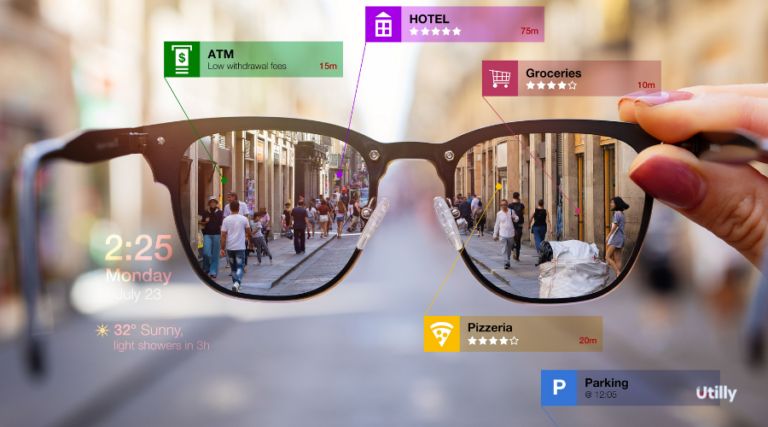
Google is preparing to take the digital experience out of the phone screen in our pockets and directly into our field of vision with Gemini AI-powered smart glasses, which it plans to launch in 2026. Developed in collaboration with Samsung, Warby Parker and Gentle Monster, these next-generation glasses aim to offer both a stylish design that can be worn in daily life and a seamless layer of artificial intelligence connected to the Android XR ecosystem. On the one hand, there’s an “audio-first” model that works solely on voice, using a microphone and camera to sense the surroundings and answer our questions in a natural language; on the other, there’s an in-lens display that shows navigation, instant translation, notifications and contextual information with a mini screen embedded in the glass. These two approaches allow us to manage many of the things we do with our phones through our gaze and voice, with a much more invisible interface, rather than huddled around a physical screen. For students, use cases such as taking notes in class, simplifying complex concepts with instant summaries, and following foreign-language lectures with translation support; for academics and trainers, managing the flow with small reminders on the glass without turning to the slide during a presentation and receiving automatic summaries at the end of the lecture can place these glasses as a serious “third tool” next to the pen and paper duo. From the point of view of managers and entrepreneurs, an interface that takes meeting notes in real time, highlights relevant data on the glass during customer visits, visualizes the workflow of field teams in the field, and a business partner that accelerates decision-making processes with simultaneous translation and in-city guidance while traveling. In countries like Turkey with a high youth population, a rapidly developing entrepreneurial ecosystem and a high density of SMEs, such wearable interfaces have the potential to both increase workforce productivity and move digitalization investments out of abstract reports and into daily practice in the field. However, the proliferation of a device that can see, listen and record the environment at all times raises new questions about privacy, data security, employee rights and attention management. Organizations will need to set clear ethical principles when adopting this technology, transparently define data usage and establish a clear trust contract with their employees. On the other hand, we also face an important choice at the individual level: Will we use these tools simply to “consume faster” or will we use them to learn more deeply, produce better and build more meaningful relationships? Smart glasses won’t completely replace phones in the short term, but they are a strong signal of a transition to more invisible and context-sensitive interfaces that question our screen-centric habits. Perhaps the simplest but most critical truth we need to remember here is that it is not the power of devices that determines the future, but the values and intentions with which we use those devices, and that as technology accelerates, our true compass still lies in our ability to remain human.
Contact us on 0800 123 4567 or [email protected]