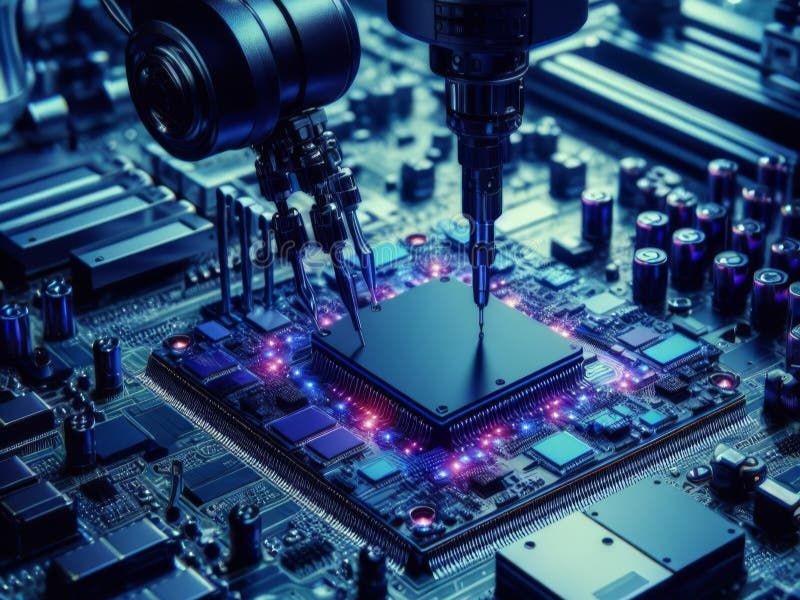
Artificial intelligence is now shaping our lives not only through applications and services, but also through invisible infrastructure wars. The chip competition between giants such as Google, Nvidia, Meta and Tesla is not just a matter of “faster computing”; it is a critical intersection that determines how sustainable, secure and manageable the digital future will be. Today, Nvidia’s GPUs are considered the backbone of the artificial intelligence world. But Meta’s move towards Google’s TPUs in its data centers shows how important diversity and independence are in this field. The introduction of different chip architectures opens up new options in terms of both performance and energy efficiency. Structures that can perform more computations with less energy have a wide range of impacts, from reducing the carbon footprint to lowering the cooling costs of data centers. The move by “hyperscaler” companies such as Amazon, Microsoft, Google, Meta and Oracle to design their own chips is a strategic move in this respect. The goal is not just to control costs, but to build a more sustainable, flexible and scalable infrastructure in the long run. Every efficiency achieved at the chip level makes a tangible difference to energy consumption and climate impact on a global scale. In a world where artificial intelligence is becoming mainstream, it is precisely these infrastructure choices that will make technology sustainable.
On the Tesla front, special chips developed for autonomous driving point to a similar transformation in mobility. An ecosystem where vehicles can learn and make decisions on their own, and do so with less energy consumption is as critical for environmental sustainability as it is for traffic safety. Tesla’s insistence on “making its own hardware” is not only about competitive advantage, but also about creating an end-to-end optimized and more resilient technology chain.